

Mission Statement
To advance accessibility and low-barrier inclusive design so people can move through the world with dignity and ease. My mission is to make inclusion a daily design practice, not a specialist exception.
Biography
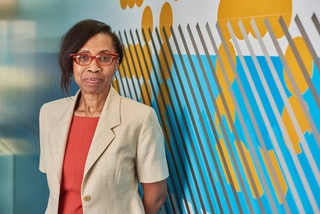
Dr Teri Okoro is an architect and inclusion consultant whose work brings together accessibility, inclusive design, equity and the lived experience that shape how people move through the world. As founder-director of TOCA, she leads a practice and consultancy committed to improving accessibility, reducing barriers and supporting safer, more people-focussed project delivery. She is also an author on inclusive project delivery, using writing to translate insight into clear, practical guidance for practitioners and decision-makers, A former Mayor for LondonDesign Advocate for Inclusion, and currently Design Council Expert, Design Review Panel member, and NRAC registered Access Consultant, she contributes to guidance, policy and project strategies across housing, regeneration, infrastructure and the public real. Her leadership roles including membership of the Architects Registration Board strengthen her commitment to cultural and systemic change within the built environment. As a design professional who brings an alternative perspective, she focuses on making invisible barriers visible and translating insight into scalable solutions. Adopting a people-centred approach, she works to shape outcomes – products, places and wider social spaces -where dignity, independence and a sense of belonging as integral, contributing to a more accessible and inclusive design culture.
Questionnaire
Where do you want to foster change and why?
To influence the early decisions that shape projects, where inclusion has the deepest impact. When we design with real lives in mind, products and places become more intuitive, generous and humane.
What or who influenced you during your professional career?
I’ve been guided by people who shared the barriers they faced, and by mentors who encouraged me to look deeper. They taught me to notice the unseen and to design with honesty and empathy.
We all have those significant moments or situations (success or failure); which one was yours, and what did you learn from it?
Early in my career, I witnessed the unsuppressed tears and emotions a disabled person viewing their newly adapted home. That moment showed me how transformative design can be. It revealed that truly inclusive design goes far beyond meeting technical requirements; it restores confidence, dignity and independence in profoundly human ways.