

Mission Statement
I’m driven by the belief that design can help turning complex ecological challenges into low-impact lifestyles, resilient cities, and inclusive futures where creativity meets responsibility.
Biography
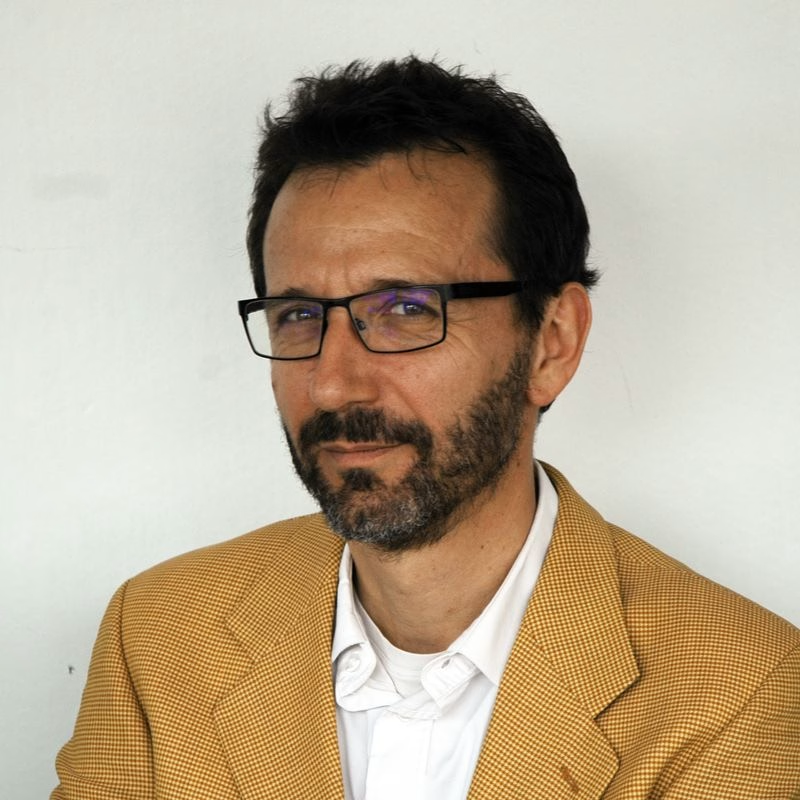
François Jégou is a European pioneer in design for sustainability and public innovation, working for 30+ years at the intersection of service design, policy transformation and ecological transition. He founded Strategic Design Scenarios (Brussels), a studio-lab driving systemic futures, participatory governance and planetary design.
He took part in major EU research (FP5–Horizon Europe) on sustainable energy, food, lifestyle, RRI and democracy blending design, foresight and collective intelligence to strengthen institutional resilience. At the start of the EU Policy Lab (JRC), and multiple regional innovation labs in Europe, he has shaped how public institutions adopt design for policy and transition. He curated global exhibitions including for the Pompidou Centre, La Villette, Triennale Milano and World Design Capital Lille 2020.
Expert for URBACT & EUI, he advises European cities on food transition, civic innovation and temporary urban uses, and trains senior civil servants (INTERREG, EUI, Sciences Po, INET Strasbourg). Co-founder of DESIS Network, he advanced design education as a lever for social change. His last book Reinventing Participatory Democracy?, based on 25 years of democratic innovation in Ghent, he champions design as a driver of Europe’s green, digital and democratic transitions.
Questionnaire
Where do you want to foster change and why?
I want to drive transitions through high democratic quality design—where collective intelligence replaces zero-sum logic and shared futures outweigh private interests.
What or who influenced you during your professional career?
My path toward sustainable futures was shaped by inspiring students and visionary peers—especially Ezio Manzini, a constant guide always one step ahead in imagining what’s next.
We all have those significant moments or situations (success or failure); which one was yours, and what did you learn from it?
Ever since I can remember, I’ve been haunted by one question: why are things the way they are – and not otherwise? It didn’t strike me once; it’s been a lifelong current pushing me toward futures thinking, design fictions, and transition stories. In every detail of daily life, I glimpse alternative worlds – some far more robust and sustainable than today’s.