

Mission Statement
My passion is accessibility and low-barrier design, ensuring emerging infrastructures and technologies remain intuitive, equitable, and open to all.
Biography
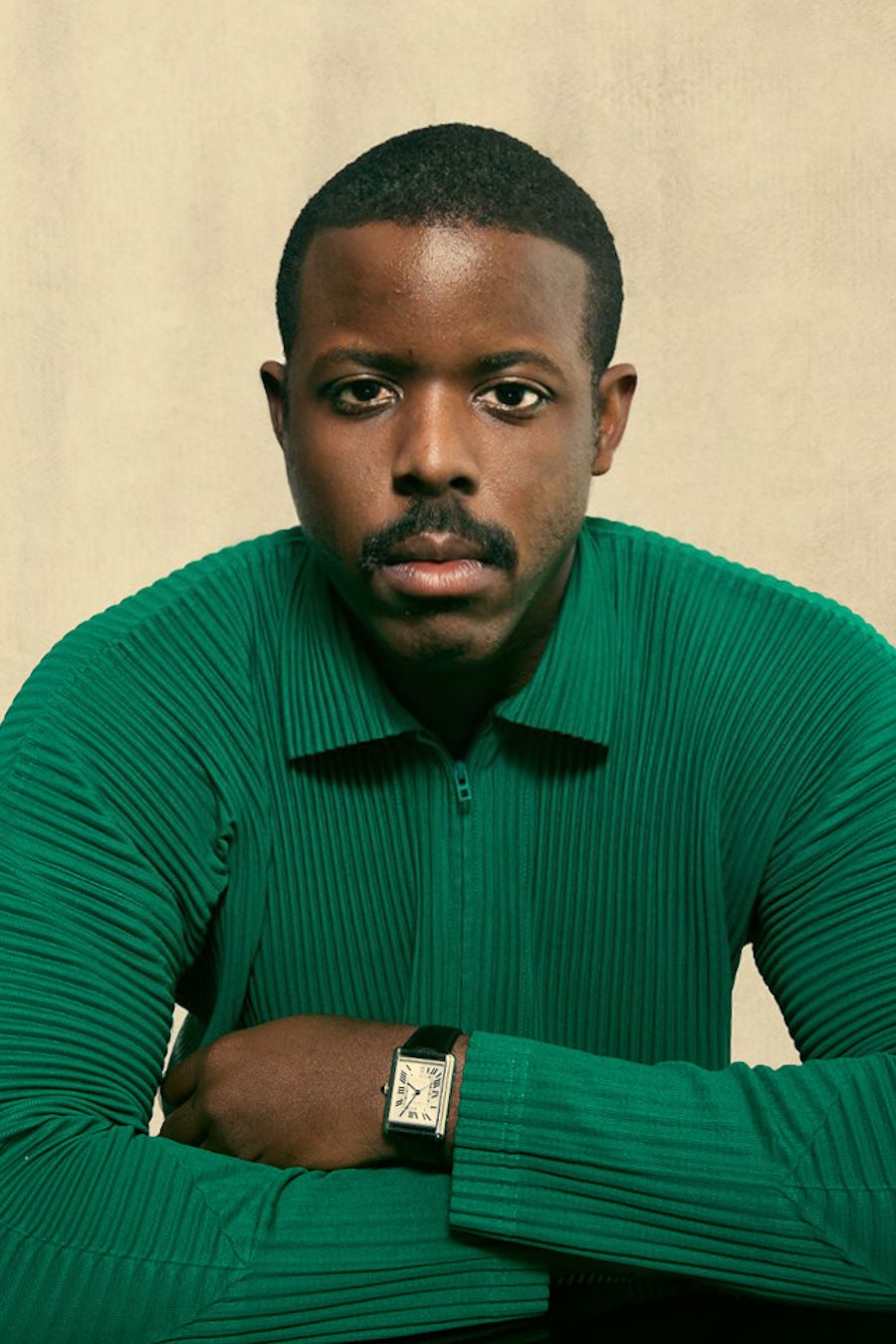
Myles Igwebuike is a Nigerian American designer, researcher, and cultural strategist whose interdisciplinary practice operates at the intersection of heritage, urbanism, and diplomacy. Working between Nigeria and London, his work interrogates memory, space, and identity — positioning design as a tool for collective repair and future-making. A graduate of the Royal College of Art, London, the world’s leading institution for art and design Myles brings a critical, research-led approach to global design discourse. Drawing from his southeastern Nigerian heritage, he founded Njiko, a think tank reimagining cultural heritage through design. Njiko treats heritage data as a living material, uncovering occluded narratives, reframing memory, and inspiring new spatial and symbolic futures. His methodology spans speculative design, material research, and policy frameworks as expressed in his TED Talk, “Divergent Thinking as a Survival Strategy.” He contributed to the curatorial team of the 2023 Sharjah Architecture Triennial, The Beauty of Impermanence, and has been recognized as a rising voice in the Global South’s design futures. Myles curated and designed the Nigeria Pavilion at the 2025 London Design Biennale, which was awarded a Special Mention by the international jury. He currently serves as a design expert on the UK’s Design Council, the national strategic advisory body for design in the UK, and is Special Assistant on Transportation to the Governor of Anambra State. In 2024, Architectural Digest named him one of their AD100 Rising Stars to Watch. He is currently leading the design of a research library in Lagos and an earth factory in Luanda, Angola, two cultural infrastructures that continue his commitment to material experimentation, environmental thinking, and spatial justice. For Myles, design is not merely form-making; it is world-making, a sacred act of storytelling rooted in ancestry and directed toward plural, sovereign futures.
Questionnaire
Where do you want to foster change and why?
I aim to transform systems by grounding decisions in participatory methods, radical care, and collective intelligence.
What or who influenced you during your professional career?
My practice is influenced by collaborators, community knowledge, and thinkers who center equity, place, and participatory methods.
We all have those significant moments or situations (success or failure); which one was yours, and what did you learn from it?
Conceptualizing Nigeria’s federal pavilion at a leading global design biennale required translating layered cultural narratives into spatial, material, and experiential strategies. The process underscored that resonant design emerges through iterative co-creation, participatory dialogue, and attentive orchestration of form, memory, and collective authorship.