

Mission Statement
My mission is to embed accessibility, inclusion, and low-barrier (no-barrier), equalities-focused design into every level of European policy and practice, co-creating inclusive futures with neurodivergent, disabled, marginalised, and underserved communities
Biography
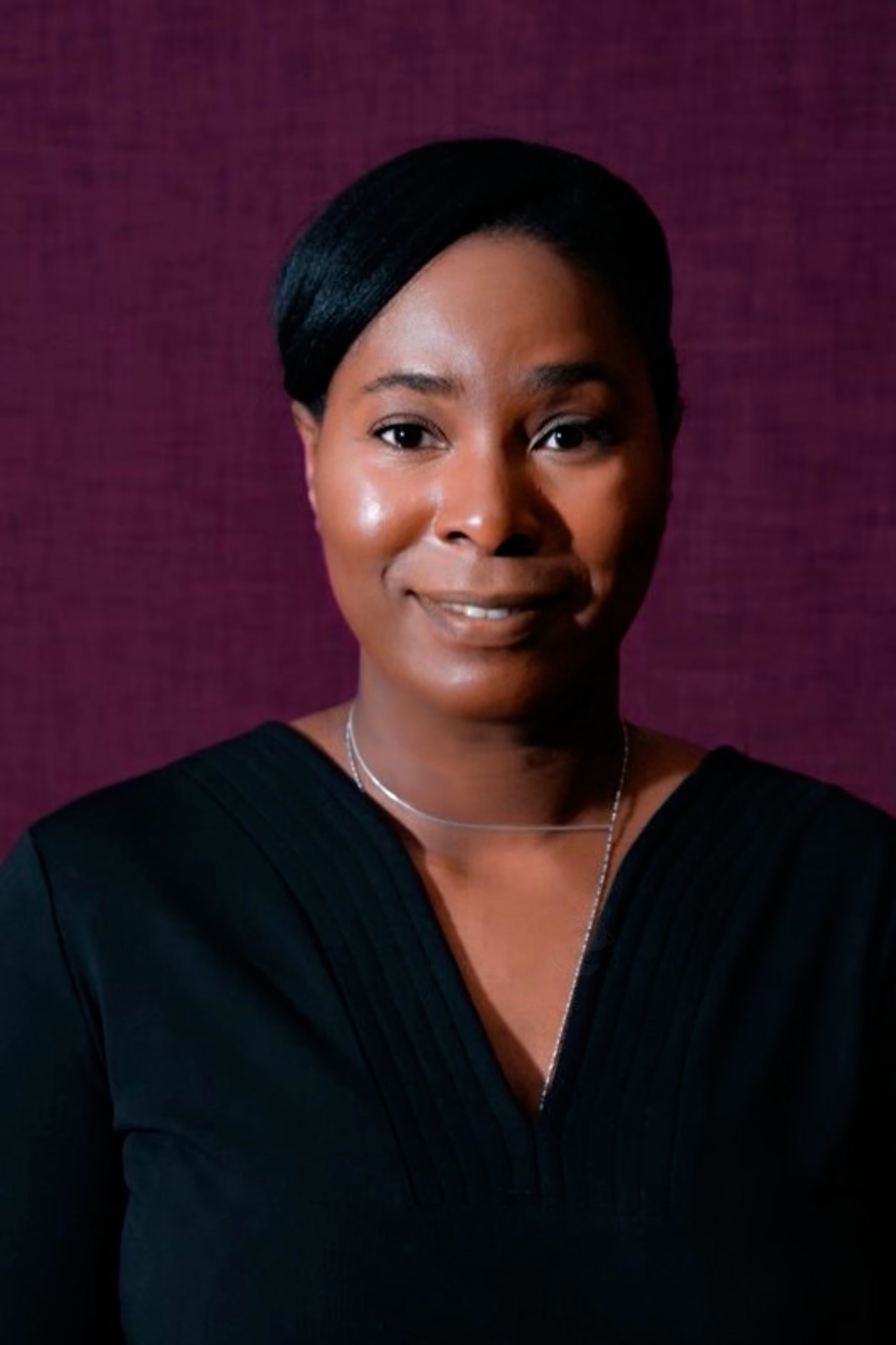
Natasha Trotman is an Equalities Designer and Researcher whose practice explores extending the frontiers of knowledge on neurodivergence, disability, and marginalised experiences through equalities design. She approaches this using an intersectional design lens. Holding a Master’s degree in Information Experience Design from the Royal College of Art (RCA), as well as qualifications in Data and Systems analysis from the University of Oxford and in therapeutic arts, Natasha’s diverse practice includes therapeutic arts, investigative play, and policy design. She sits on a local authority Inclusive Design Review Panel and on the Strategic Implementation Board for Co-production Matters (pan-disability, neurodiversity). She has held research positions at the RCA’s Helen Hamlyn Centre for Design (HHCD). She has contributed to the Wellcome Trust, HHCD Design, and The Mind Research project, focusing on co-creation with neurodiverse and disabled communities. Natasha is a Design Council Expert, serves on the Advisory Board for The DisOrdinary Architecture Project, and is a member of the British Council Arts and Creative Economy Advisory Group. She also co-leads the UN’s Global Research and Action Network for a New Eco-social Contract (GRAN-ESC) ‘Disabilities, Intersectionalities, and Eco-Social Contracts’ group. She is a Fellow of the Royal Society of Arts, a member of the Chartered Society of Designers, and a Fellow of the Institute of Equality and Diversity Professionals. Additionally, she offers consultancy for Wellcome, co-designs, and co-delivers their Social Justice Curriculum.
Questionnaire
Where do you want to foster change and why?
I aim to promote change in accessible, inclusive, low-barrier (no-barrier) equalities design across European policy and practice, enabling neurodivergent, disabled, and marginalised communities to co-create and co-produce futures that leave no one behind.
What or who influenced you during your professional career?
I have been most influenced by my Mother, Grandmother, Great-grandmother, and my mentors, whose resilience, insight, compassion and care have consistently shaped my professional journey.
We all have those significant moments or situations (success or failure); which one was yours, and what did you learn from it?
A defining moment was recognising that meaningful change in accessibility, inclusion and equalities design is not a destination but a continuous, shared journey. I learned that self-compassion is as important as empathy for others and that staying open to emergence allows for deeper, continuous growth and learning.