

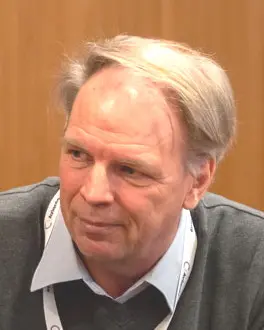
Mission Statement
I develop and test visual information to enable patients to do things.
Biography
Karel van der Waarde studied graphic design in the Netherlands (The Design Academy, Eindhoven), and the UK (De Montfort University (Leicester), and Reading University).
He started in 1995 a design – research consultancy in Belgium. The company develops and tests patient information leaflets, instructions, forms, and protocols in both digital and analogue formats. Most of the projects are related to information about medicines for patients, doctors and pharmacists. (www.graphicdesign-research.com)
In 2025 he teaches at BA, MA, and PhD level at the Lucerne University of Applied Sciences and Arts (Switzerland), and University of Hasselt (Belgium).
He is a board member of International Institute for Information Design (IIID, Vienna, Austria) and the International Plain Language Federation (IPLF), and editorial board member of Information Design Journal, Hyphen, She Ji, and Visible Language.
Questionnaire
What or Who influenced you during your professional design career?
Every project starts by meeting and interviewing people that might be expected to look at the information. I’ve cooperated on the design of tax forms, election ballots, instructions for medicines, apps to explain treatments, and websites for research. All these projects started by interviewing the people who need to deal with this information. Every interview includes at least one gem, something that is new for me, and that gives me a motivation to try something else. So, the people I talk with before I write or design anything influence me. Every single interview impacts my work or my thinking about things. Trying to consider how their views could be incorporated in the design of information. Of course, the people who pay for these projects, academic colleagues, fellow researchers, and family and friends have influenced me too. The main ones however remain the people who ultimately do not have an option, but are obliged to use the things that I’ve helped to design. Summarizing: I listen to people who have to find, read, understand, and use the information I design.
Where do you want to foster change?
The main change I would like to see is that patients in Europe receive information that enable them to take decisions about their medicines. This requires at least two major changes.
The first major change is a move of the information supply from the medical-legal-commercial domain to a care-domain. These factors have proven to be insufficient as a basis for the care of patients. Putting patients really in the center of care would require fundamental changes in European regulations, guidelines and templates. The current severe shortcomings in the system need to be addressed first before the next steps can be made.
The second change is that the knowledge patients have about ‘coping with their disease’ needs to be taken seriously. A treatment should be part of a dialogue in which both the healthcare provider and patient agree on the next steps in a treatment. This is already happening, but it needs to go a lot further.
Both these changes make it necessary to reconsider terms like ‘health literacy’, or ‘adherence’.
These terms divide between ‘us who knows what is good’ and ‘them who don’t know’. This division is incorrect. It is more beneficial to figure out what the abilities, and motivations of patients are, and use these as starting points for a continuous dialogue.
Summarizing: I would like to see change the ways in which we provide information about medicines in Europe and put patients first.
We all have those significant moments/situations (success or failure); which one was yours, and what did you learn from it?
There is always an unexpected turn in any conversation with people. Some people are able to state within a few words exactly what the core of an issue is or reformulate a complex description into a few simple words.
Every conversation is a fairly basic learning experience. It is based on respect for the people I approach. I can’t know or predict what their background is and what their motivations are. Conducting polite dialogues might seem easy, but simple misunderstandings can reduce the value of the conversation. Attentive listening and prudent observing are essential principal skills. These should be taught, trained, and exercised throughout any education and throughout any career. I’m still making mistakes and still try to learn how to avoid these.
An example is a conversation I had in West London when I interviewed people with HIV. One of the participants was a lady in her forties. She told me about her background and told me that she had been a prostitute with a heroin addiction. She told me about her encounters with the healthcare systems that she had endured. Her needs and expectations did not really relate to any of the available services. She provided in a few minutes so many ideas and suggestions for fundamental modifications that I had to re-listen to the recording several times. She kept emphasizing that ‘We don’t need more resources, we just need to listen to people.’ This statement has proven to be very important in many subsequent projects.